



The average of the top 50 medical malpractice verdicts jumped from $32 million in 2022 to $56 million in 2024. For physicians with claims-made coverage, that number is directly tied to tail insurance costs.
Tail premiums are typically calculated as a percentage of a physician’s mature claims-made premium, which means that as malpractice costs rise, so does the price of tail coverage. Add a hardening insurance market, evolving state laws, and a physician workforce that’s changing jobs more frequently than ever, and the financial stakes around tail coverage are higher entering 2027 than they’ve been in years.
Physicians who understand these dynamics before signing their next employment contract or planning a career transition have a meaningful advantage — in negotiating leverage, in coverage options, and in avoiding unexpected costs. Here’s what’s driving the 2027 tail insurance outlook.
What is Tail Insurance?
Not every physician needs tail insurance, but every physician with a claims-made malpractice policy should understand when it becomes necessary.
Tail insurance, also known as an Extended Reporting Period (ERP), protects physicians if a malpractice claim is reported after a claims-made policy has ended. Physicians with occurrence policies generally don’t need it because those policies cover incidents that occurred while the policy was active, regardless of when the claim was filed.
For physicians with claims-made coverage, however, a gap in protection opens the moment a policy ends. Changing jobs, switching carriers, selling a practice, or retiring can all create that gap unless tail insurance is in place.
The Cost of Malpractice Claims is Rising
Although malpractice claim frequency has remained relatively stable in many areas, claim severity has continued to climb. The numbers are significant.
Research from The Doctors Company found that economic and social inflation have added an estimated $4 billion in insured malpractice losses over the past decade. Claims exceeding $2 million have increased more than tenfold since 1990. And the average of the top 50 malpractice verdicts rose from $32 million in 2022 to $48 million in 2023 and $56 million in 2024.

Several forces are driving those larger payouts: rising medical costs, higher economic damages, social inflation, and more frequent high-value jury verdicts. The upward trend shows no signs of reversing.
This matters for tail coverage because insurers must estimate future claim costs when pricing tail policies today. The higher those projections, the more expensive tail coverage becomes, which means physicians who delay planning for tail coverage often pay more than those who plan ahead.
State Laws Are Extending Exposure
The size of a malpractice claim is only part of the picture. How long a physician remains exposed to potential claims is equally important, and that timeline is set by state law.
Statutes of limitations, discovery rules, damage caps, and special provisions for minors all vary by state. Several recent changes are worth watching.
- California
California’s Medical Injury Compensation Reform Act (MICRA) held non-economic damages to $250,000 for nearly 50 years. That era is over. Beginning in 2023, the cap started increasing under new legislation, rising annually until it reaches $750,000 for non-death cases and $1 million for wrongful death cases, with future adjustments tied to inflation.For one of the nation’s largest healthcare markets, the implications are substantial. Carriers adjusting to high potential losses will price that exposure into malpractice premiums and tail coverage. - Colorado
Colorado has also raised statutory damage caps, reflecting a broader trend toward larger compensation in medical liability cases, particularly as inflation drives up the long-term cost of medical care and economic damages.For physicians in high-risk specialties, more serious available damages translate directly to more cautious underwriting and higher premiums. - Florida
Florida has become one of the most closely watched malpractice states. Recent court decisions and legislative changes have reshaped wrongful death claims, sovereign immunity limits, and other long-standing malpractice protections. The full impact is still developing, but insurers generally respond to legal uncertainty by repricing risk.
State-specific changes like these matter beyond state lines. Large states such as California, Colorado, and Florida tend to function as leading indicators for broader malpractice trends. As courts and legislatures expand liability in major markets, carriers often adjust pricing and underwriting practices nationally.
Specialty Matters: Who Faces the Highest Tail Costs
Not all physicians face the same malpractice risks. Certain specialties consistently generate larger claims due to the complexity of care involved and the severity of potential outcomes.
Specialties commonly associated with higher claim severity include obstetrics and gynecology, neurosurgery, orthopedic surgery, general surgery, and emergency medicine. These fields typically involve high-acuity patients, complex procedures, and longer liability timelines, meaning that claims can surface years after the care was provided.
When severity is high and liability exposure extends over time, insurers charge more for both malpractice coverage and tail insurance. For physicians in these specialties, understanding future tail obligations isn’t optional, but essential to evaluating any employment agreement, partnership opportunity, or retirement plan.
A Hardening Insurance Market
Medical malpractice insurers are responding to the same pressures affecting the broader insurance industry: rising claim costs, economic uncertainty, and increasing litigation expenses. The result is a market that has grown more selective and more expensive.
Across the market, carriers have been tightening underwriting standards, increasing premiums, reducing capacity in higher-risk specialties, limiting coverage in certain states, and issuing more non-renewals. These are hallmarks of a hardening market.
In a soft market, insurers compete aggressively for business, which tends to keep premiums lower and coverage options broader. In a hard market, the calculus flips. Physicians, particularly those in high-risk specialties or states with expanding liability, may find fewer options available and fewer carriers willing to compete for their business.
For physicians with claims-made coverage, this environment makes timing critical. Physicians who plan for tail coverage before a career transition have more leverage. Those who wait often have less.
Tail Insurance Costs Are Rising With Premiums
Most carriers price tail coverage as a percentage of a physician’s mature claims-made premium—typically between 150% and 300%, depending on the carrier and specialty.
That calculation means tail costs don’t move independently. As malpractice premiums rise in response to larger verdicts, longer liability timelines, and a hardening market, tail insurance costs rise alongside them. A physician with an annual premium of $30,000 could face a tail bill between $45,000 and $90,000. And those figures climb with the underlying premium.
Physicians who wait until they’re actively changing jobs or announcing retirement typically find themselves with little room to negotiate who pays for tail coverage and limited time to compare options.
More Physicians Will Need Tail Coverage in 2027
Tail insurance has historically been framed as a retirement expense. That framing no longer reflects how physicians practice.
A 2024 CHG Healthcare survey found that 62% of physicians have made a career change since 2022. American Medical Association’s 2024 Physician Practice Benchmark Survey, only 42.2% of physicians now work in physician-owned private practices, down from 60.1% in 2012, while the share working in hospital-owned practices has grown to 34.5%.
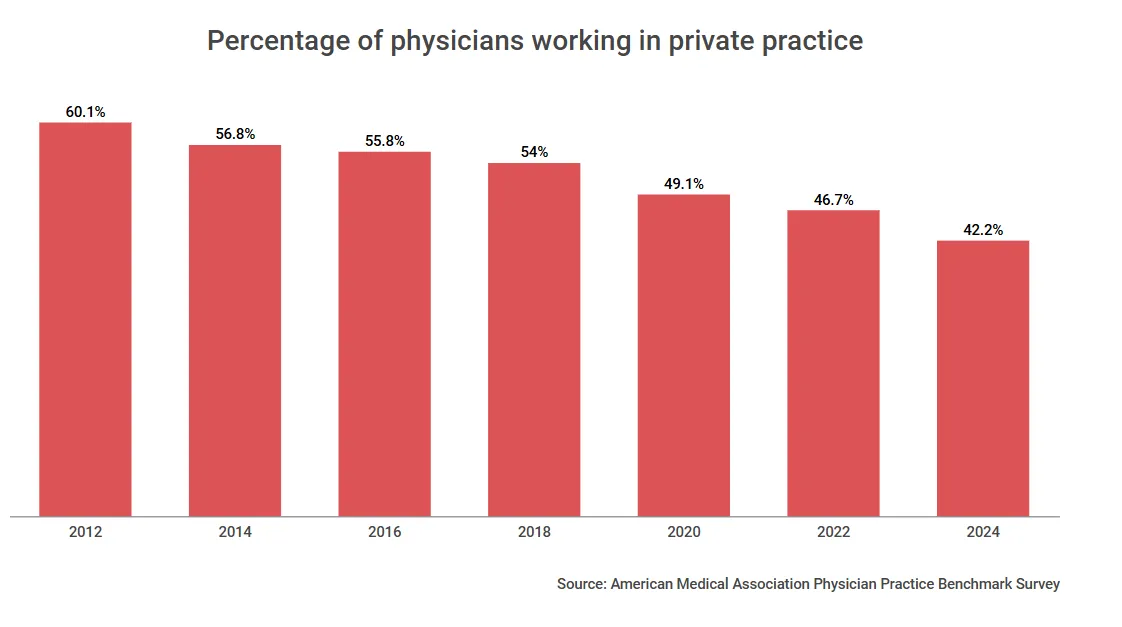
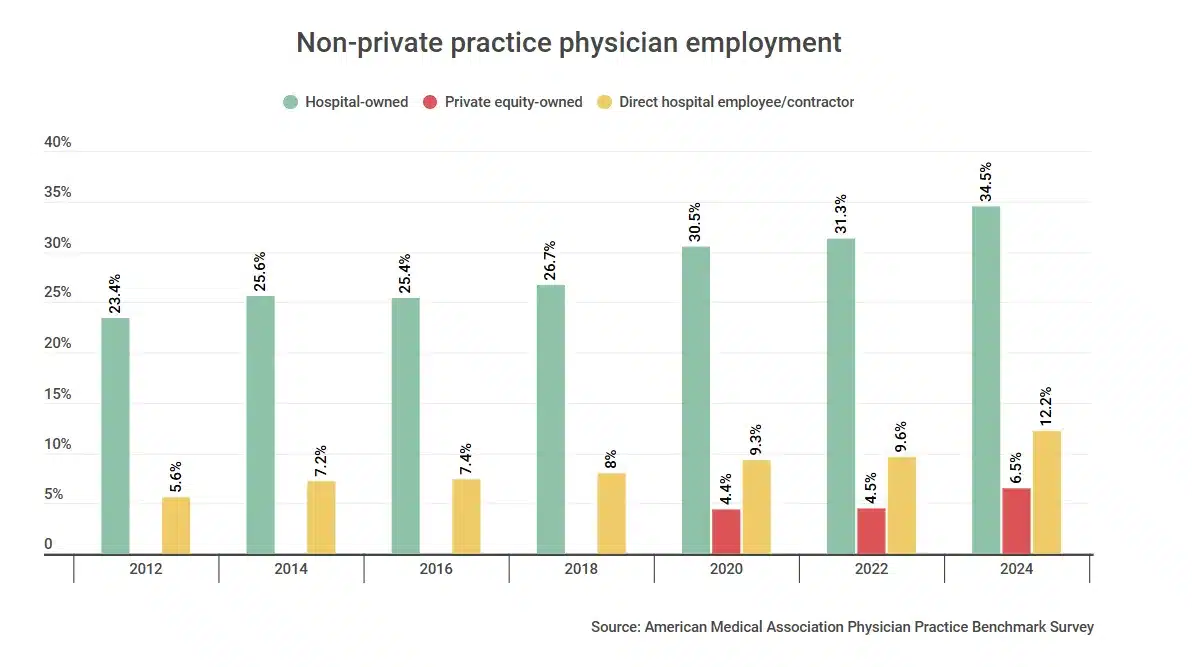
Each career move can trigger a tail coverage decision. Physicians with claims-made policies may need tail insurance when accepting a new position, joining a health system, moving from private to employed practice, switching carriers, selling a practice, or retiring.
For a growing number of physicians, that means multiple tail coverage decisions over the course of a career, not just one at the end. Understanding who is responsible for tail coverage should be part of every employment contract review, not a conversation that starts after a resignation letter is in.
How to Prepare Before Your Next Career Move
The physicians with the most options are the ones who plan before transition, not after. By the time a resignation has been submitted or a new contract signed, negotiating leverage over tail coverage has largely been spent.
Before changing jobs, switching carriers, selling a practice, or retiring, physicians should:
- Confirm their coverage type
Occurrence policies generally don’t require tail coverage. Claims-made policies do, when the policy ends. - Review their employment agreement
Many contracts specify who is responsible for purchasing tail coverage and under what circumstances. Know what your agreement says before you’re in a negotiation. - Estimate the cost
Factor tail insurance into any financial planning around a career move. A rough estimate based on your current premium and specialty can prevent an unpleasant surprise. - Talk to a specialist before signing
A malpractice insurance specialist can identify coverage gaps, explain your options, and help you negotiate tail provisions before you’re committed to a new arrangement.
Get Expert Guidance on Your Tail Coverage Options
The physicians most exposed to tail coverage surprises are the ones who only start asking questions after a resignation is in. By the time you’ve accepted a new position or announced a retirement, your negotiating leverage on who pays for tail coverage and how much is already limited.
The malpractice environment entering 2027 rewards preparation. Larger verdicts, changing state laws, and a tightening insurance market are all compressing the window between “I should look into this” and “I wish I had looked into this sooner.”
MEDPLI specializes in tail coverage for physicians navigating exactly these transitions: job changes, practice sales, carrier switches, retirement. If you’re within two years of a career move and haven’t reviewed your tail obligations, that’s the conversation to start now.
Request Your Tail Quote Today
About the Author
Max Schloemann is a medical malpractice insurance broker helping physicians and surgeons secure Medical Professional Liability coverage. A Magna Cum Laude graduate of Southern Illinois University’s College of Business, he was named Outstanding Management Senior.
Max began his career in 2008 at an industry-leading firm and founded MEDPLI in 2017 to guide private practice doctors and physicians in transition through the complexities of malpractice insurance.
Outside of work, Max, his wife Kristen (a Physician Assistant), and their four kids enjoy the outdoors and attending the kids’ sporting events. Contact Max for malpractice insurance questions.
Latest from the Medical Malpractice Insurance Blog

Medical malpractice broker Max Schloemann shares tips on how to be smart about debt, insurance & finances when starting your medical career. Learn more here.

Medical malpractice broker Max Schloemann shares tips on how to be smart about debt, insurance & finances when starting your medical career. Learn more here.
-
See 2026 South Carolina medical malpractice insurance rates by specialty, carriers, payouts, and regulations. Get your custom MEDPLI quote today.
-
See 2026 Indiana medical malpractice insurance rates by specialty, carriers, payouts, and regulations. Get your custom MEDPLI quote today.