



Tail insurance protects physicians from claims filed after a claims-made policy ends. This guide explains how tail coverage works, when it’s needed, typical costs, and variables that influence coverage options.
What Is Tail Insurance?
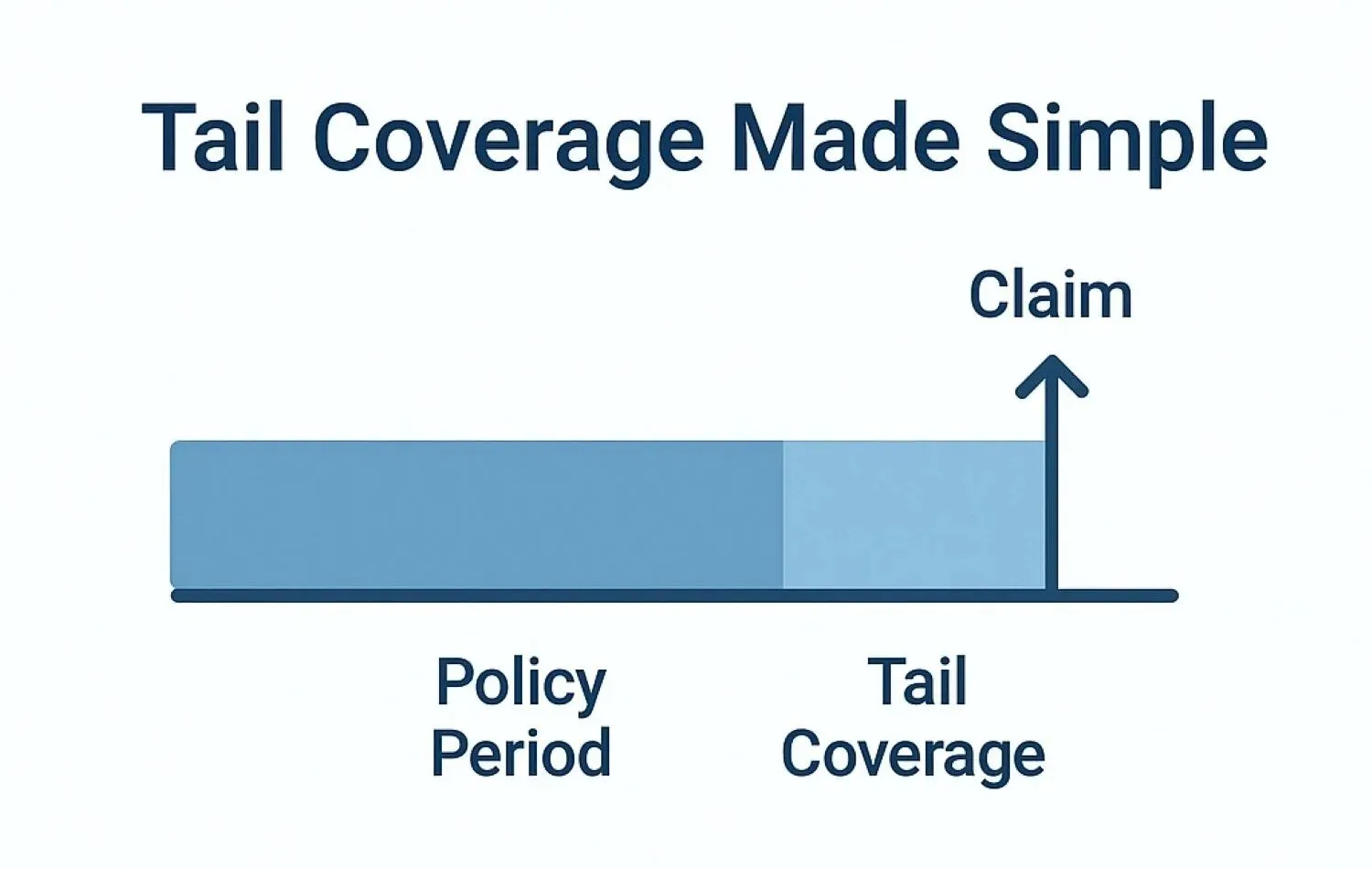
Tail insurance, or Extended Reporting Period (ERP) coverage, extends protection after a claims-made policy expires. Unlike occurrence policies, claims-made policies won’t cover claims filed after expiration – even if the incident occurred while the policy was active.
Tail coverage closes this gap, protecting you from claims filed after your policy ends. Without it, you’re financially responsible for future claims.
Tail insurance typically covers the same things your claims-made policy did:
Whether you need tail coverage depends on a few key factors. The most important include what type of policy you carry and what’s changing in your practice.
Do I Need Tail Coverage?
Tail coverage only applies to claims-made policies; if you carry occurrence coverage, you don’t need it – occurrence policies cover claims regardless of when they’re filed.
If you carry claims-made coverage, you’ll need tail insurance if you plan to:
Expert Tip: Think through your tail coverage needs before making any of these transitions to prevent coverage gaps and avoid the unnecessary stress of rushing to secure a policy.
How Long Does Tail Coverage Last?
Tail coverage term lengths range from 1 year to unlimited. Standard terms are for 2, 3, and 5 years.
Expert tip: Choose tail coverage that outlasts your state’s malpractice statute of limitations to avoid coverage gaps. For example, a 2-year tail policy in a state with a 3-year claims window would leave a year-long coverage gap. Because statutory exceptions can unpredictably outlast that window, many physicians opt for unlimited-term tail coverage despite the higher cost to ensure maximum protection.
How Much Does Tail Insurance Cost and Who Pays It?
Tail policies typically cost about 200% of your annual premium, paid as a lump sum. For example, if your annual premium is $40,000, you’d likely pay about $80,000 for tail coverage when your claims-made policy expires.
That total cost varies based on several factors, including:
Who pays depends on your employment contracts — past and future. Responsibility may fall on you, your former employer, or your new employer.
Regardless of who pays, don’t let price be the sole deciding factor. Cheap coverage can leave you underprotected or exposed with exclusions. Work with a specialized malpractice broker to find a plan that works for your budget without sacrificing protection.
Expert Tip: If you’re an independent contractor or practice owner, your premiums qualify as a business expense. If you’re an employed doctor, malpractice premiums may be treated as a job-related expense and listed under itemized deductions on Schedule A of Form 1040.
Tail Insurance vs. Other Policies
Depending on your situation and next steps, you may have multiple options to protect yourself after a claims-made policy ends.
- Employer-Provided Coverage: Some employers provide ongoing liability or tail coverage for former employees, covering past work done under the employer’s policy at no or little cost to the employee.Expert Tip: Have an independent malpractice broker review your employer-provided policy for fine-print exclusions or undercoverage. These policies don’t always provide adequate protection.
- Nose Coverage (Prior Acts Coverage): Your new insurer assumes liability for claims citing incidents that occurred when your old policy was active. It avoids coverage gaps and is often cheaper than buying separate tail coverage, but it is not always available.Expert Tip: Read your employment contract carefully; some just require zero gaps in coverage, others require tail coverage specifically.
- Going Bare (Not Recommended): We don’t recommend ending a claims-made policy without buying tail coverage or other replacement options, except in rare, low-risk situations. Doing so leaves you personally liable for future claims, which can cost thousands or millions of dollars, depending on the situation, your state laws, and payout trends.
If you decide tail coverage is your best option, the next step is choosing where to purchase it.
Do I Have to Purchase Tail Coverage From My Current Insurance Provider?
Many physicians assume they’re locked into their current carrier. That’s rarely the case.
Tail insurance can be purchased:
- As an endorsement (or “add-on”) to an existing claims-made policy
- As a stand-alone tail policy (subject to underwriter review and approval)
- Directly from your employer’s carrier (depending on the insurer; many carriers don’t work directly with providers and require you to work through a malpractice broker)
Expert Tip: Don’t accept the first quote or assume your current provider is best. Consult a medical malpractice broker to review your coverage, explain your options, and clarify costs.
Get Your Tail Coverage Quote Today
We simplify the paperwork, expedite the process, and give the best options at competitive rates.
- Save Time & Money
We compare quotes from 100+ carriers to find you the best coverage at a competitive rate. - Get Specialized Insights
We assess your risk profile and connect you with underwriters who give you options that align with your needs. - Direct Access to Experts
Direct access to our U.S.-based team ensures support is available whenever you need it. - Reduced Stress
We vet carriers and analyze policy details for you, so you can feel confident in your coverage.
Request Your Tail Quote Today
Tail Malpractice Insurance FAQs
Yes. Even if the occurrence policy starts immediately after the claims-made expiration, you’ll need tail insurance to cover claims tied to incidents that occurred during the claims-made period.
If you’re switching carriers, ask about nose coverage — it’s often cheaper than tail. If you’re staying with the same carrier, they may offer discounted tail or other options to ease the transition.
An extended reporting endorsement is another name for tail coverage – an add-on to an existing claims-made policy. It extends your reporting window beyond the policy’s expiration date.
The “best” option will depend on your current provider, your employment contract, and your future practice plans and coverage needs. Most insurers offer tail coverage for current claims-made policyholders, but we recommend getting quotes from multiple carriers to find the best rate and coverage.
Letting your claims-made policy expire without securing coverage – also known as “going bare” – leaves you financially responsible for any claims that arise after coverage ends. Given the size of today’s malpractice payouts, we never recommend it.
Many carriers provide a 30-60 day window for purchasing tail coverage after your policy ends. That said, we recommend securing tail coverage before expiration; waiting increases the risk of coverage gaps and may limit your tail options. MEDPLI brokers will help you compare quotes and finalize coverage before your policy expires.
About the Author
Max Schloemann is a medical malpractice insurance broker helping physicians and surgeons secure Medical Professional Liability coverage. A Magna Cum Laude graduate of Southern Illinois University’s College of Business, he was named Outstanding Management Senior.
Max began his career in 2008 at an industry-leading firm and founded MEDPLI in 2017 to guide private practice doctors and physicians in transition through the complexities of malpractice insurance.
Outside of work, Max, his wife Kristen (a Physician Assistant), and their four kids enjoy the outdoors and attending the kids’ sporting events. Contact Max for malpractice insurance questions.
Latest from the Medical Malpractice Insurance Blog

Physician reimbursement is falling behind rising private practice costs. See the data, impact on patient access, and why it matters. Read here.

The Doctors Company is dropping New Jersey physician malpractice rates by an average of 25.1%, effective October 1, 2026. Here's what it means for your premium.

The Doctors Company completed its acquisition of ProAssurance. See what it means for current policyholders and the malpractice insurance market going forward.

Malpractice Payouts for Florida OBGYNs Are High Florida OB/GYN [...]